
How to Layer Seating Like a Designer
Well-designed living rooms rarely rely on a single piece of furniture.
Instead of one oversized sofa, designers create spaces through layers — combining different seating elements to shape how a room looks, feels, and functions. The result is a space that feels more natural, more flexible, and more personal.
Layering seating isn’t about adding more. It’s about creating balance.
Move Beyond the Single Sofa
For years, the standard layout was simple: one large sofa facing a focal point.
Today, that approach is shifting.
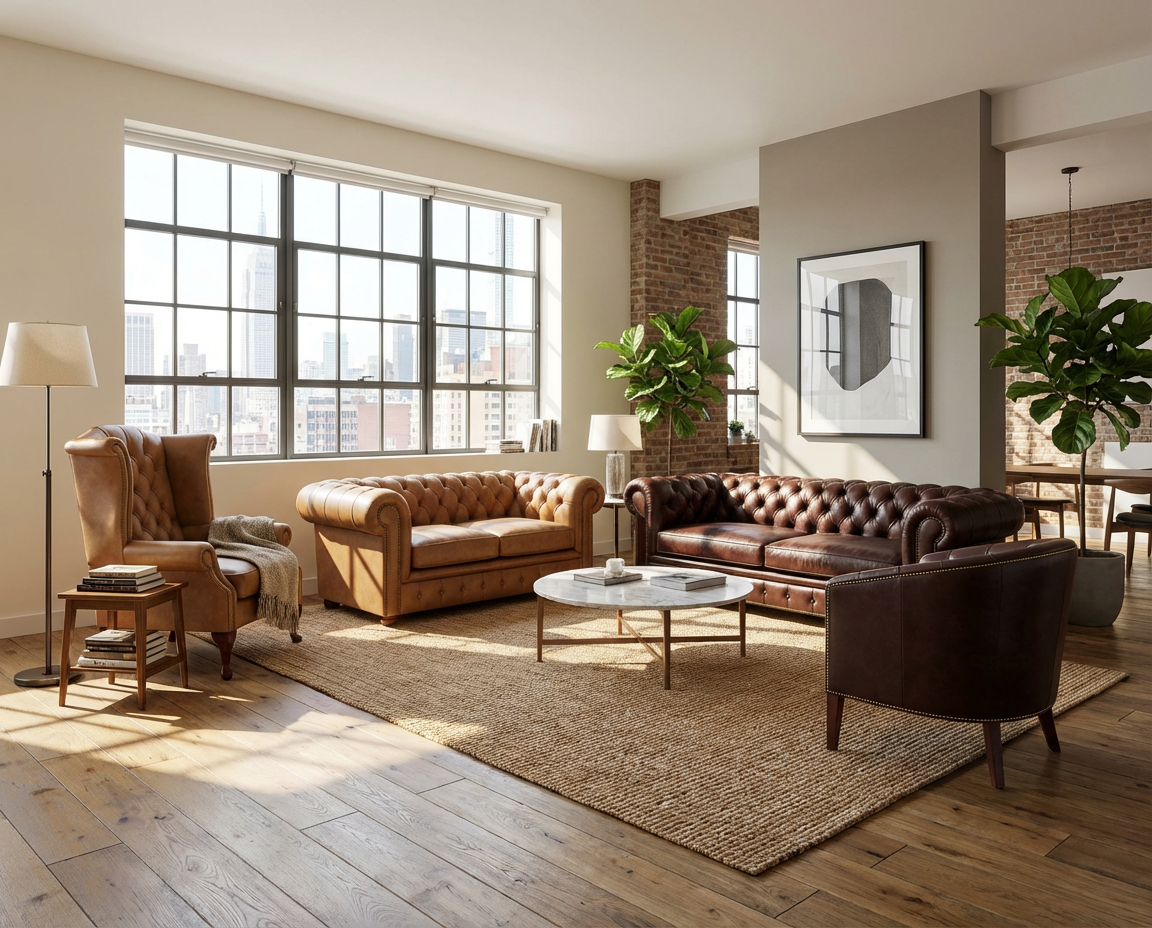
Layered seating introduces variation — a combination of pieces that work together rather than one that does everything. A sofa may anchor the room, but chairs, loveseats, or additional seating define how the space is used.
This creates a more dynamic and inviting environment.
Start with a Foundation Piece
Every layered space begins with a foundation.
This is typically a sofa — something that grounds the room visually. A structured Chesterfield works particularly well here because of its strong silhouette and presence.
From there, the room builds outward.
Add Contrast with Chairs
Once the foundation is set, chairs introduce contrast.
This contrast can come from shape, scale, or proportion. A deeper club chair softens the structure of a sofa. A high back chair adds height and definition. A tub chair brings in a more compact, sculptural element.
The goal isn’t to match — it’s to complement.
Use Loveseats for Balance
In many modern interiors, loveseats are replacing larger sofas altogether — or working alongside them.
Two loveseats facing each other can create a more intimate, conversational layout. A single loveseat paired with chairs offers flexibility without overwhelming the space.
They bring proportion back into the room.
Think in Zones, Not Pieces
Layered seating works best when you stop thinking in individual items and start thinking in zones.
A main seating area for conversation
A corner for reading or quiet moments
A secondary seat that supports flow
Each piece plays a role, and together they create a space that feels complete without feeling crowded.
Keep a Cohesive Palette
While shapes and sizes may vary, cohesion comes from materials and color.
Leather naturally ties different pieces together. Even when styles differ, a consistent material or tone creates visual harmony.
This allows you to mix without creating chaos.
👉 Discover materials and order 6 free samples
Leave Space to Breathe
One of the most important elements of layered design is restraint.
Not every corner needs to be filled. Negative space allows the room to feel open and intentional. It gives each piece room to stand out.
Layering isn’t about adding more — it’s about placing better.
A More Natural Way to Live
Layered seating reflects how people actually use their homes.
Some sit upright. Others lounge. Some prefer quiet corners, while others gather. A single piece can’t accommodate all of this — but a layered space can.
The result feels less designed, and more lived in.
And that’s what makes it work.