
The History of the Chesterfield Sofa
Some pieces of furniture follow trends. Others define them.
The Chesterfield sofa belongs to the latter; a design that has remained relevant for centuries, not because it changed, but because it never needed to.
Origins in 18th Century England
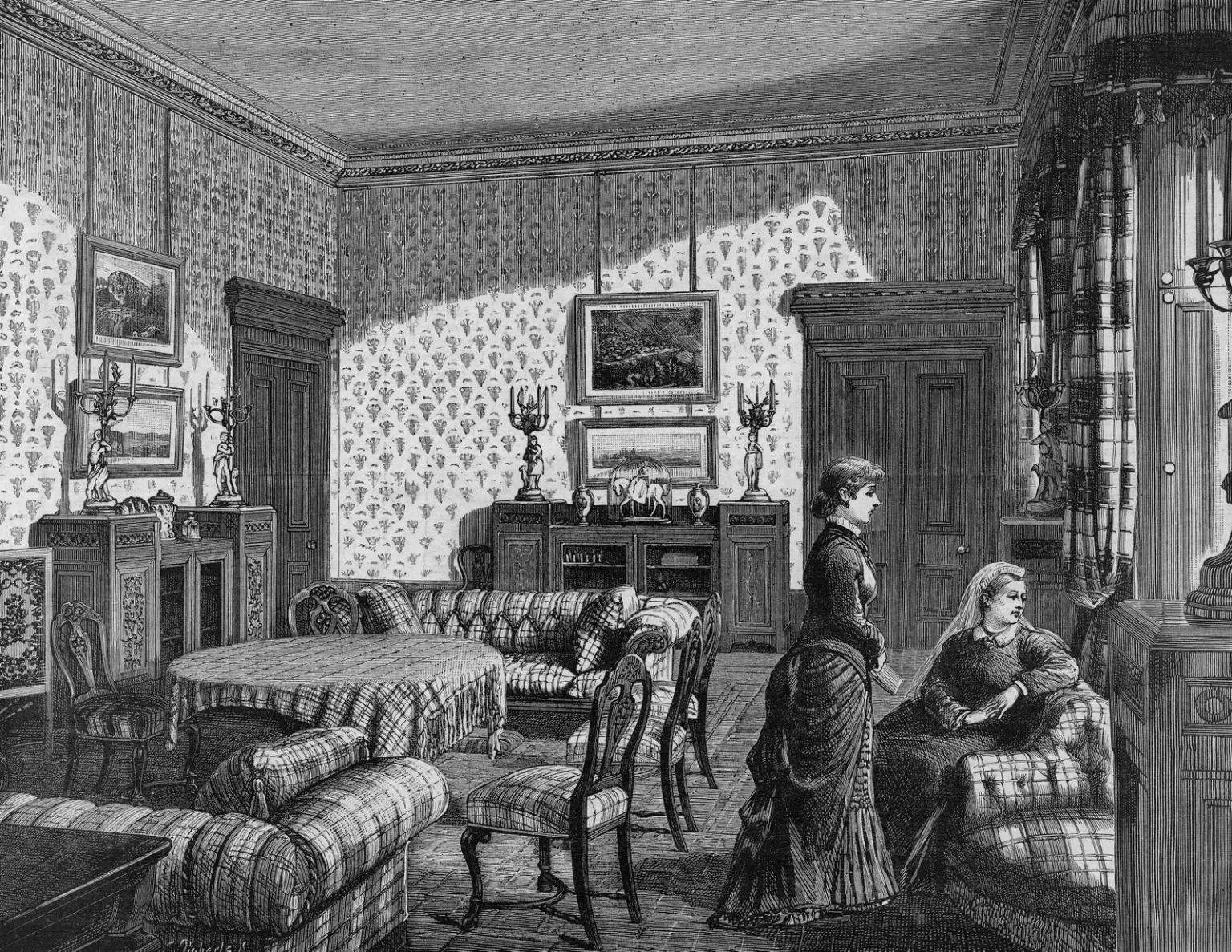
Illustrations from the 1800s from The Balmoral Castle – Queen Elizabeth II’s Summer Retreat
The story of the Chesterfield begins in 18th century England.
It is widely believed that the design was commissioned by Lord Philip Stanhope, the 4th Earl of Chesterfield. The request was simple yet specific: a piece of furniture that allowed a gentleman to sit upright in comfort without wrinkling his clothing.
The result was a sofa unlike any other at the time — with deep button tufting, equal arm and back height, and a structured, supportive seat.
It was both practical and refined.
A Symbol of Status and Craftsmanship
As the design spread, the Chesterfield quickly became associated with sophistication and status.
It was a natural fit for the interiors of gentlemen’s clubs, libraries, and aristocratic homes. Upholstered in rich leather, often in deep brown or oxblood tones, it conveyed a sense of permanence and quiet luxury.
More than just furniture, it became a symbol of craftsmanship — a piece that required skill, precision, and time to create.
The Rise of the Icon
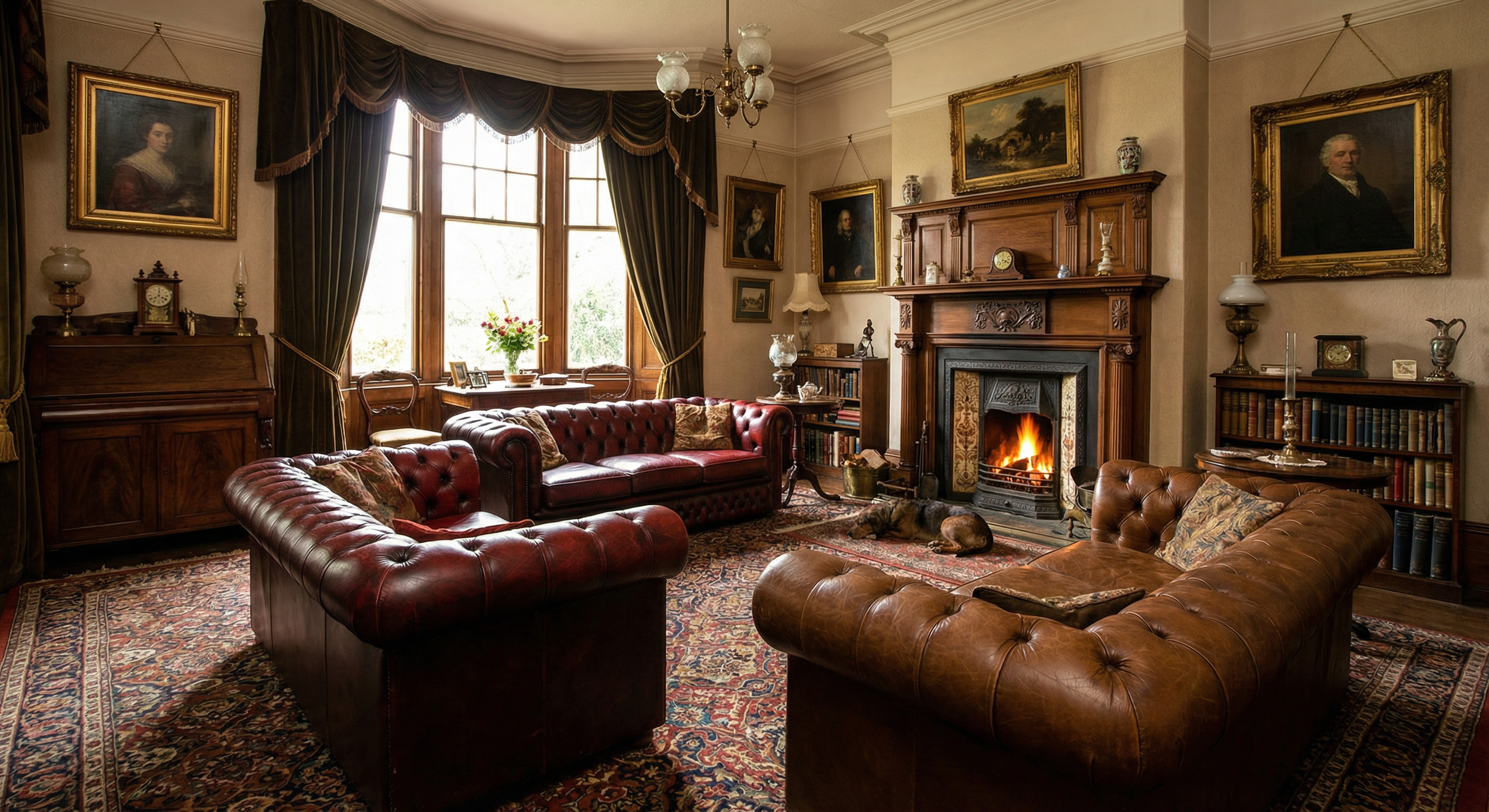
By the 19th century, the Chesterfield had become an established design classic.
Its distinctive silhouette made it instantly recognizable, and its reputation extended far beyond England. It began appearing in homes, offices, and public spaces across Europe and eventually the United States.
What made it unique was its balance — formal but comfortable, structured but inviting.
Evolution Without Losing Identity
Over time, the Chesterfield adapted to changing interiors without losing its core identity.
While the original versions were often firm and upright, modern interpretations introduced variations in depth, cushioning, and proportion. Some became more relaxed, others more minimal — but the essential elements remained:
Deep button tufting
Rolled arms
A unified, sculptural form
This ability to evolve without losing character is what has allowed the Chesterfield to remain relevant in both traditional and contemporary spaces.
The Chesterfield Today
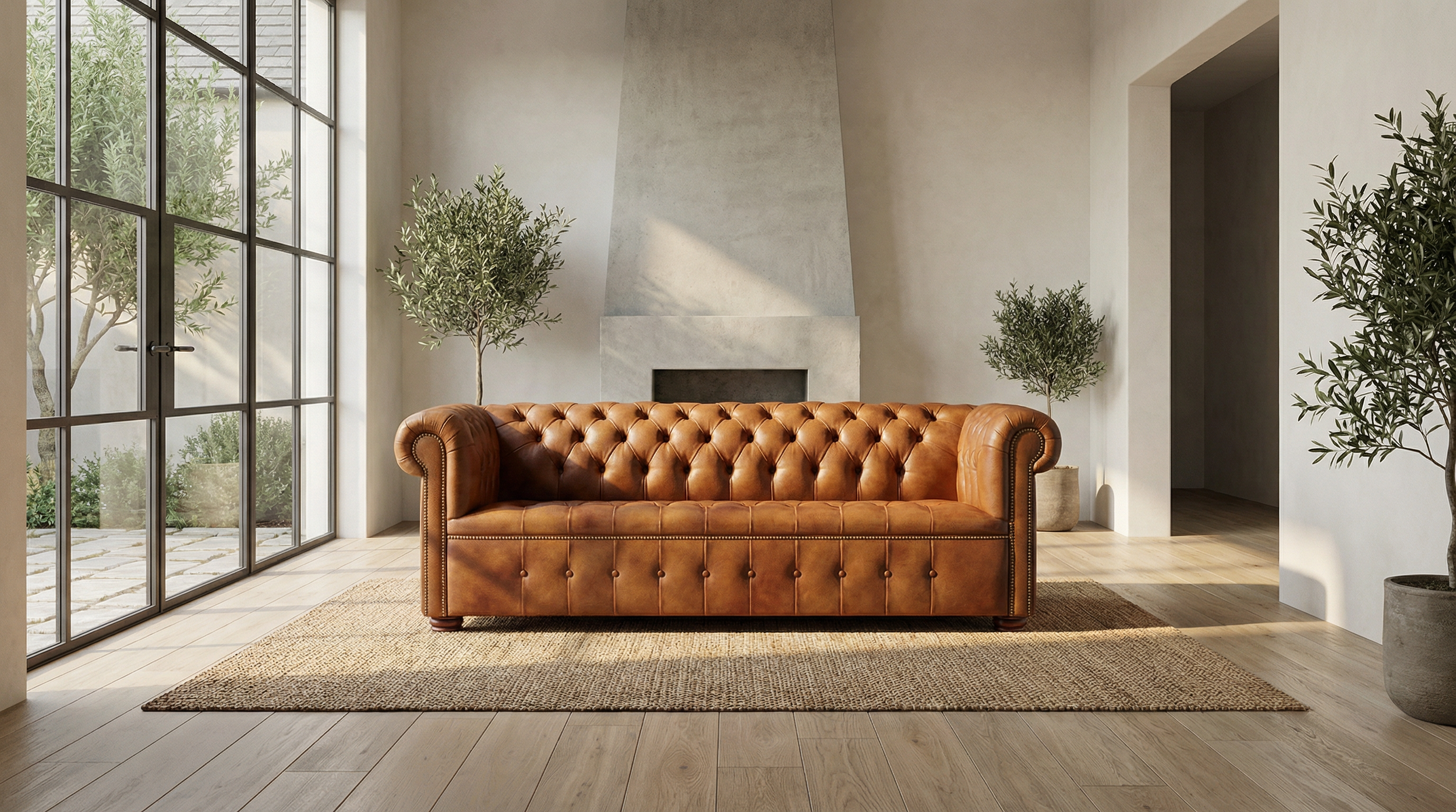
Today, the Chesterfield is no longer confined to formal interiors.
It appears in modern apartments, industrial lofts, boutique hotels, and relaxed family homes. Designers use it as both a statement piece and a grounding element — something that brings depth and texture into a space.
Its appeal lies in its versatility.
A Chesterfield can feel classic and traditional, or clean and contemporary, depending on how it’s styled. It adapts, but it never disappears.
A Timeless Design
Few pieces of furniture carry the same sense of history.
The Chesterfield has remained largely unchanged for over two centuries — not out of resistance to change, but because its design continues to work.
It offers something that trends cannot: consistency, presence, and lasting character.
And in a world where interiors are constantly evolving, that kind of permanence is what makes it truly timeless.